Why Certain Formal Dresses Trigger Curiosity and Desire
Wiki Article
Why Certain Formal Dresses Trigger Curiosity and Desire
Some formal dresses are admired politely.
Others stop conversations.
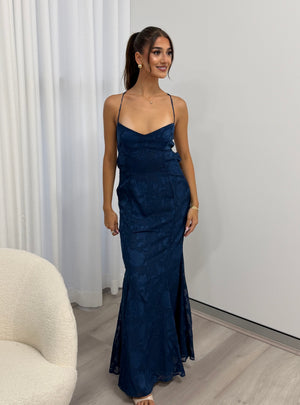
The difference isn’t how revealing they are—it’s how intelligently they suggest. Curiosity and desire are not triggered by exposure, but by invitation. The most compelling formal dresses leave something unresolved, encouraging the observer’s mind to lean in rather than look away.
This effect is psychological, intentional, and deeply rooted in human perception.
1. The Brain Is Drawn to What’s Incomplete
Human attention is naturally pulled toward unfinished patterns. When a dress reveals just enough—through a slit, an asymmetrical neckline, or a partially open back—it creates a visual pause.
That pause becomes curiosity.
The brain wants closure. It fills the gap with imagination, which is far more powerful than full disclosure. This is why subtle design often feels more desirable than obvious display.
2. Contrast Creates Immediate Fascination
Curiosity is triggered by contrast:
Structured bodice with flowing fabric
Covered neckline paired with an open back
Minimal silhouette with one dramatic detail
Contrast signals intention. It tells the observer the design was chosen, not accidental. That intentionality reads as confidence, and confidence amplifies desire—quietly, but unmistakably.
3. Ambiguity Invites Projection
The most intriguing formal dresses resist being easily categorized.
They’re not fully classic, not fully modern.
Not fully modest, not fully bold.
This ambiguity leaves space for interpretation. People project their own narratives onto the wearer—who she is, what she represents, why she chose that dress. Desire often begins as a question, not an answer.
4. Movement Turns Attention Into Interest
Static beauty fades quickly. Movement sustains attention.
Dresses that shift with walking, catch light differently as the body turns, or reveal new angles with motion create a dynamic experience. Each step becomes a continuation of the story, not a repetition.
Curiosity grows when the dress keeps changing—subtly, elegantly—over time.
5. Precision Signals Confidence
Well-tailored formal dresses frame the body with purpose. Clean lines, controlled draping, and thoughtful proportions suggest self-awareness and self-respect.
Observers instinctively associate precision with confidence. And confidence—especially calm, unforced confidence—is one of the strongest non-verbal triggers of desire.
6. Suggestion Is More Powerful Than Exposure
Design that hints rather than exposes feels intelligent. It respects boundaries while still being expressive.
A high slit is more compelling when paired with an otherwise refined silhouette. A low back feels intentional when balanced by long sleeves or structured shoulders. These combinations suggest control rather than demand attention—and control is magnetic.
7. Cultural Signals Play a Role
Certain elements carry shared meanings:
Deep colors signal depth and presence
Structured shoulders imply authority
Soft fabrics suggest approachability
When a dress uses familiar signals but rearranges them unexpectedly, it creates both comfort and surprise. That blend is fertile ground for curiosity and desire.
Desire Begins Where Certainty Ends
Certain formal dresses don’t aim to impress instantly. They aim to linger.
They allow curiosity to form.
They let desire grow quietly.
They reward attention instead of demanding it.